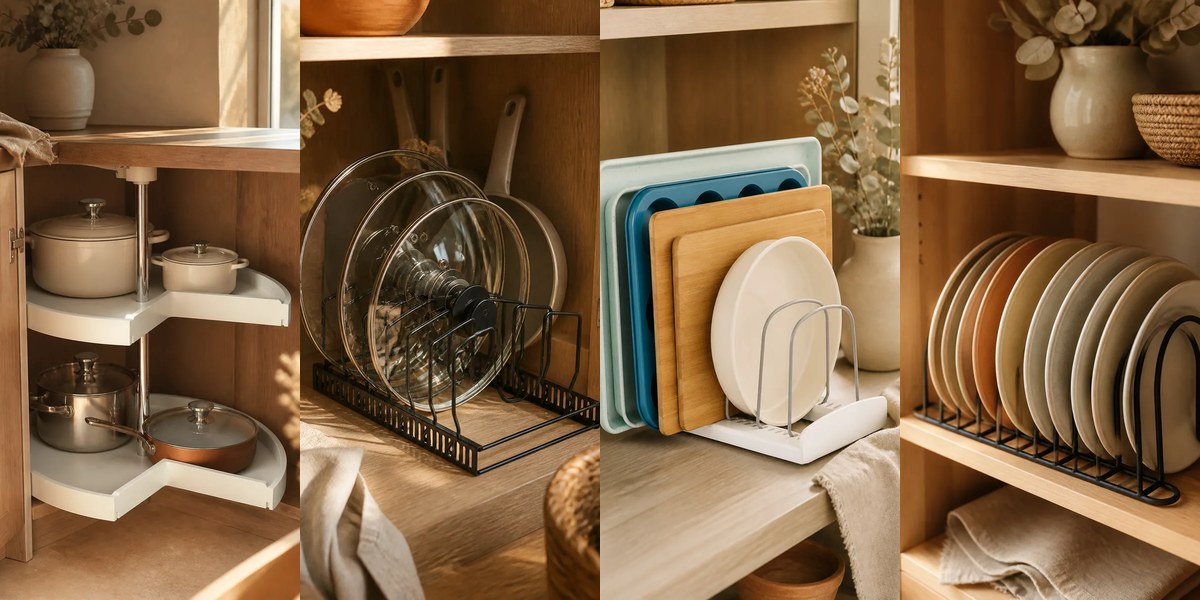

Kitchen cabinets hide a lot of wasted space. Deep corners swallow pots, shelves leave gaps above plates and lids slide everywhere. The right organizer turns each cabinet into something you can see into and reach, without a remodel. These seven racks and shelves suit most kitchens and fit without tools.
Before you buy: prices and stock change often, so we do not list prices. Use the links to check current options and read recent reviews. This guide contains affiliate links, so we may earn a commission if you buy through them, at no extra cost to you.
Measure before you buy
Measure the width, depth and height of each cabinet and the door opening. Note hinges, pipes and the position of shelves. Choose organizers that adjust, since cabinets vary, and buy for the problem you actually have. A rack that fits well gets used every day, and one that is slightly wrong ends up in a drawer.
Pots, pans and plates
A corner cabinet shelf
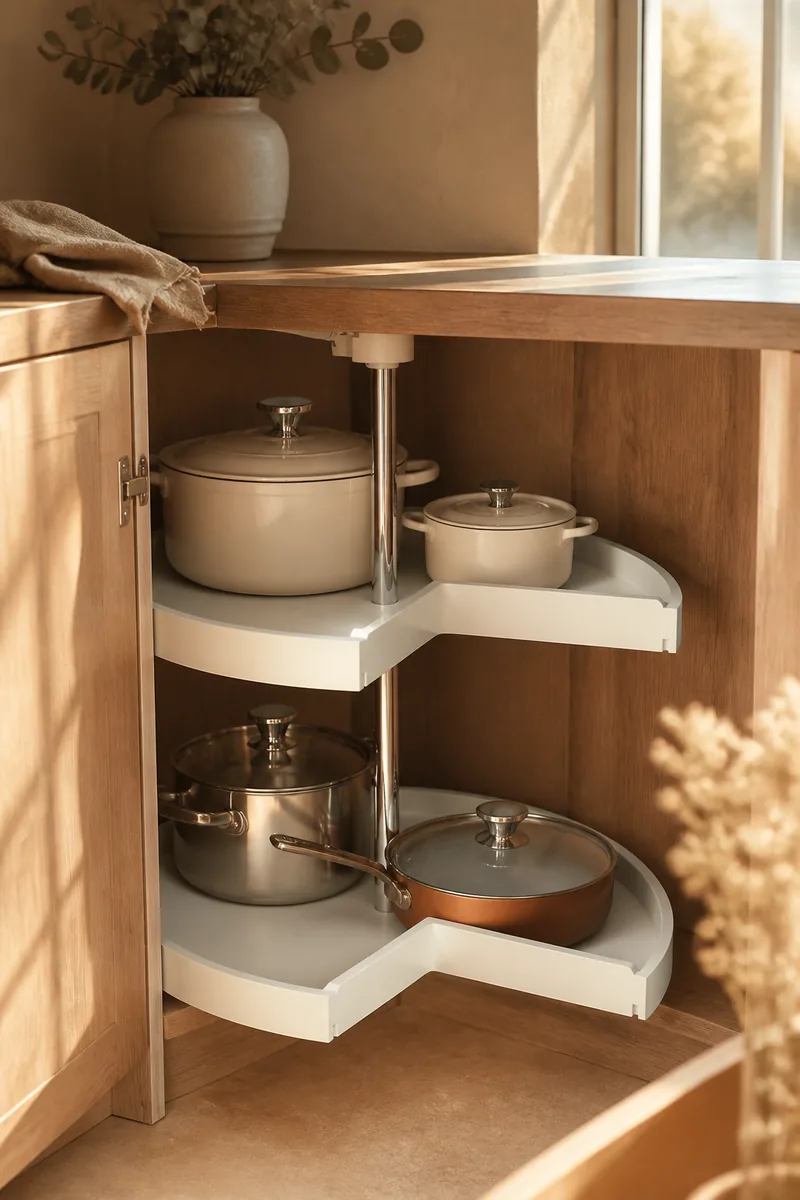
The corner of a base cabinet is the hardest place to reach. This two-tier pie-cut lazy Susan from Rev-A-Shelf spins pots and pans to the front so you do not have to kneel. Measure the door opening, since the unit has to fit through it, and check that it matches the corner's shape.
 (opens Amazon in a new tab)
See our pick: corner cabinet organizers (opens Amazon in a new tab)
A pot lid rack
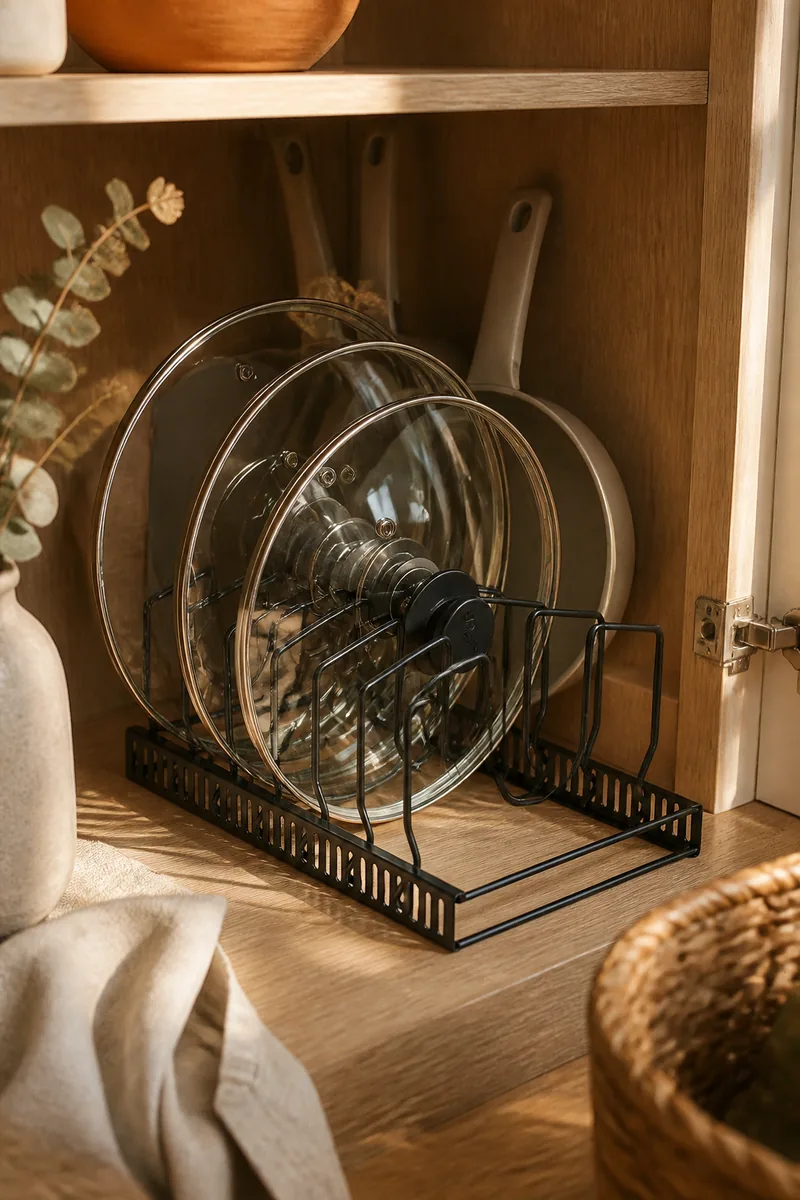
A rack keeps lids upright and easy to find. This one has seven adjustable compartments for lids and bakeware and fits a cabinet or a counter. Pick an adjustable one, since lid sizes vary a lot between pots.
 (opens Amazon in a new tab)
See our pick: pot lid racks (opens Amazon in a new tab)
A bakeware rack
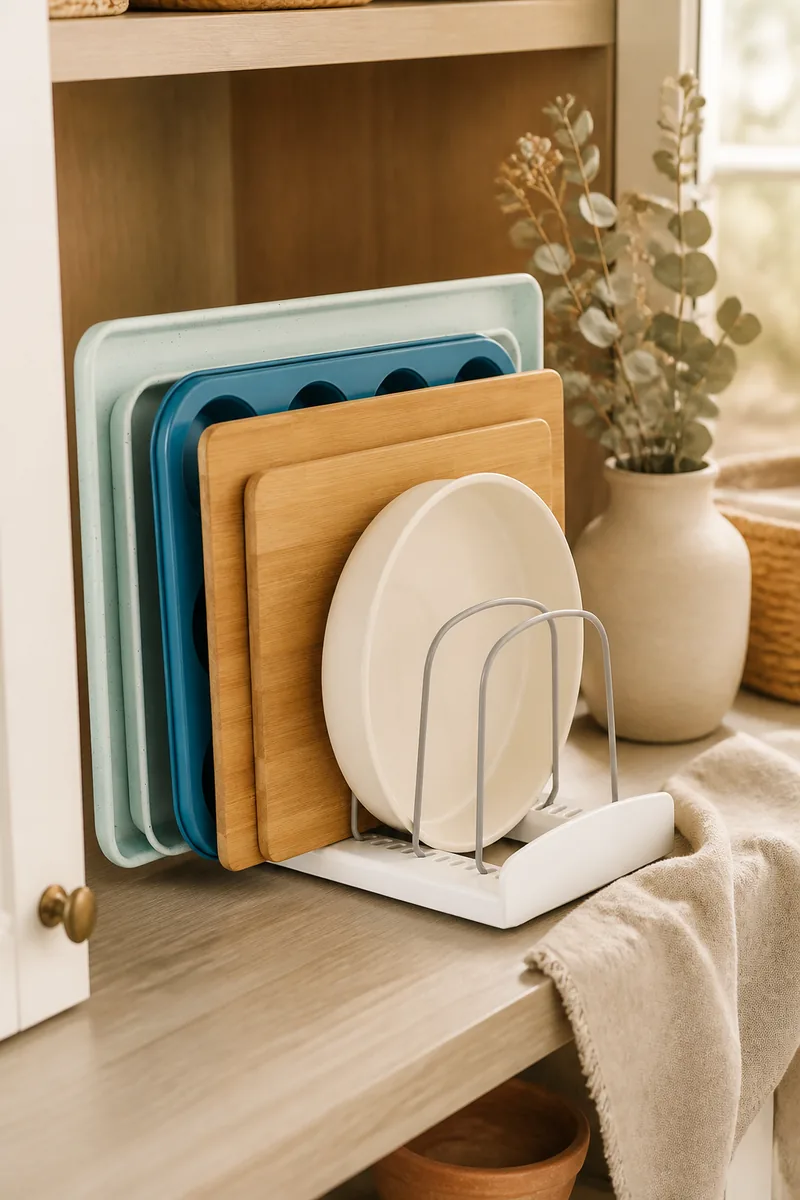
Sheet pans and cutting boards stack awkwardly. In this YouCopia rack with adjustable dividers they stand on end and slide out one at a time. It suits a cabinet that is tall rather than wide. Check the width of your sheet pans before you buy.
 (opens Amazon in a new tab)
See our pick: bakeware racks (opens Amazon in a new tab)
A plate rack
A rack holds plates on their edge, which makes it easy to lift out one without moving a stack. This eight-slot rack also takes cutting boards and bakeware. It suits a deep drawer or cabinet. Check that the slots fit your plate thickness.
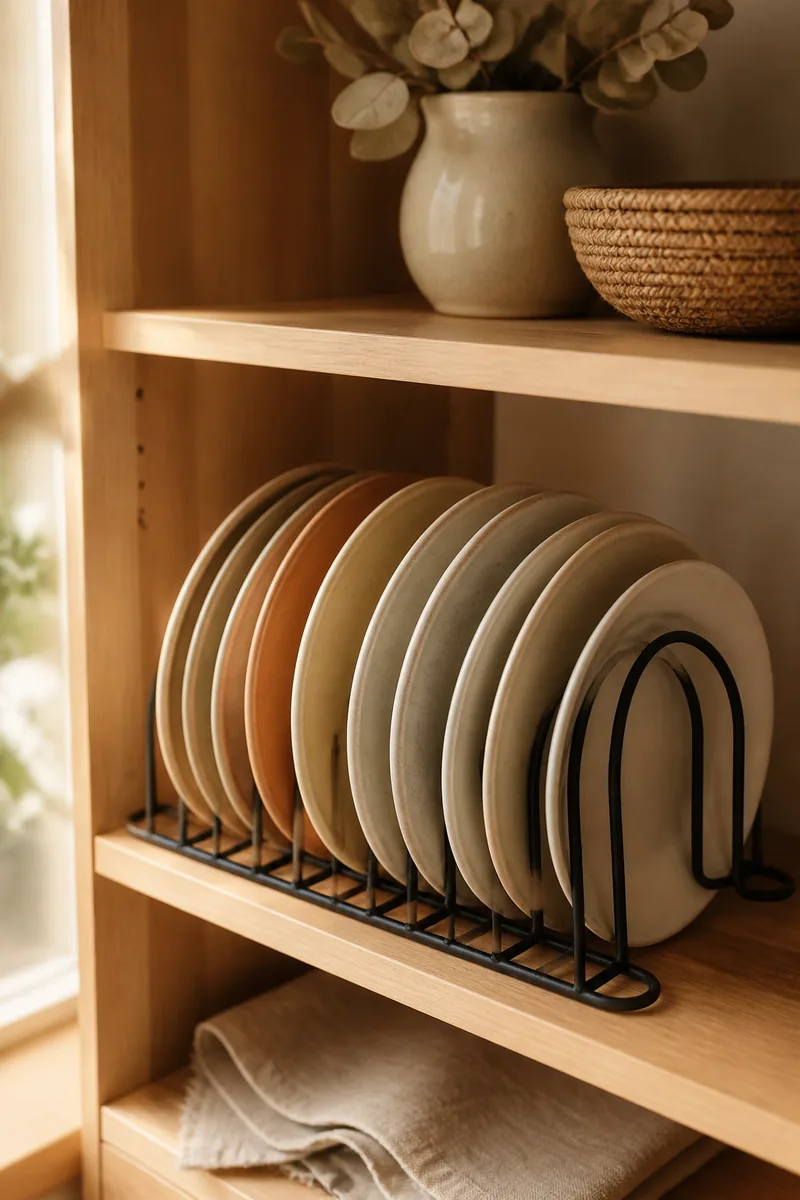 (opens Amazon in a new tab)
See our pick: plate racks (opens Amazon in a new tab)
Knives and boards
A knife organizer
A block that sits in a drawer holds knives safely and frees the counter. This bamboo in-drawer block protects the blades and your fingers and keeps the handles in reach. Measure the drawer depth and length before you buy, and check that the drawer closes with the knives in.
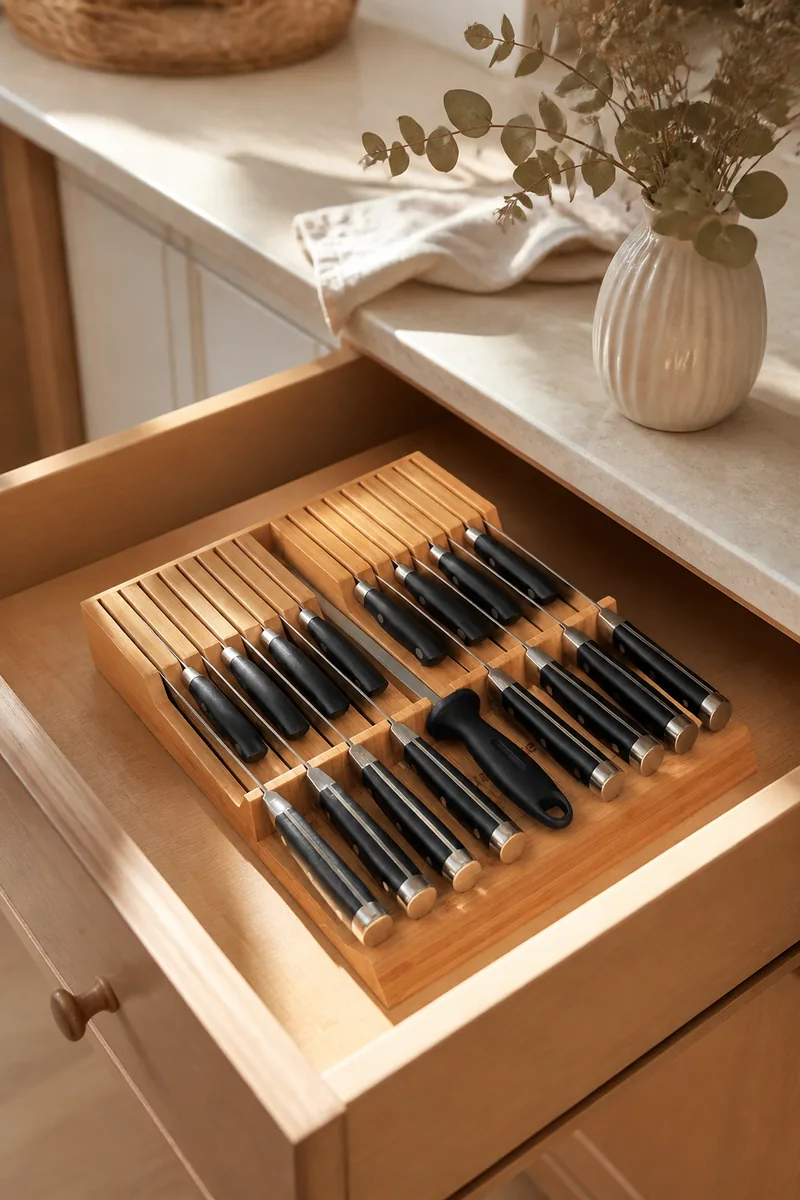 (opens Amazon in a new tab)
See our pick: in-drawer knife organizers (opens Amazon in a new tab)
A cutting board holder
Boards leaning in a cabinet slide and fall. This compact rack keeps them upright and easy to pull out, and it also holds lids and baking trays. It suits the inside of a cabinet or the side of a counter. Check the slot width against your thickest board.
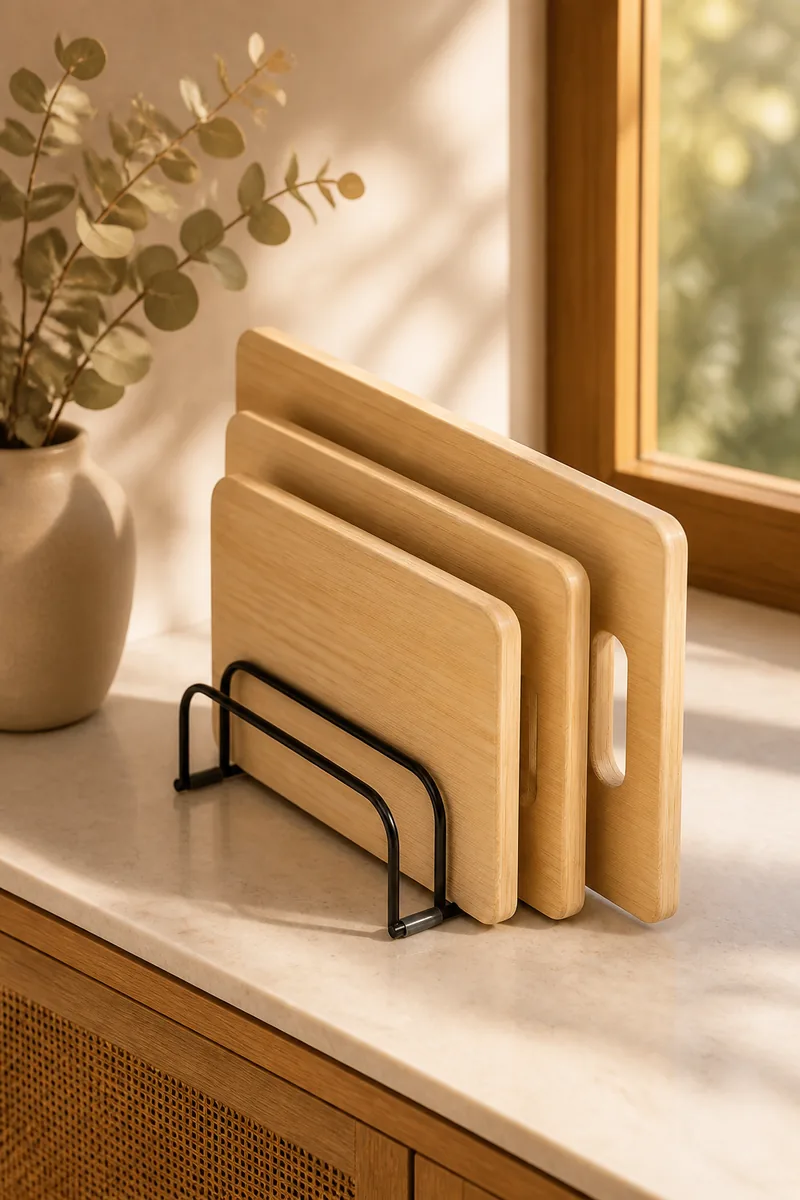 (opens Amazon in a new tab)
See our pick: cutting board holders (opens Amazon in a new tab)
A rack for the back of the door
The back of a pantry or cabinet door is free space. This eight-tier metal rack holds spices and small jars and mounts over the door or on the wall. The door has to close with it loaded, so check the clearance and the weight.
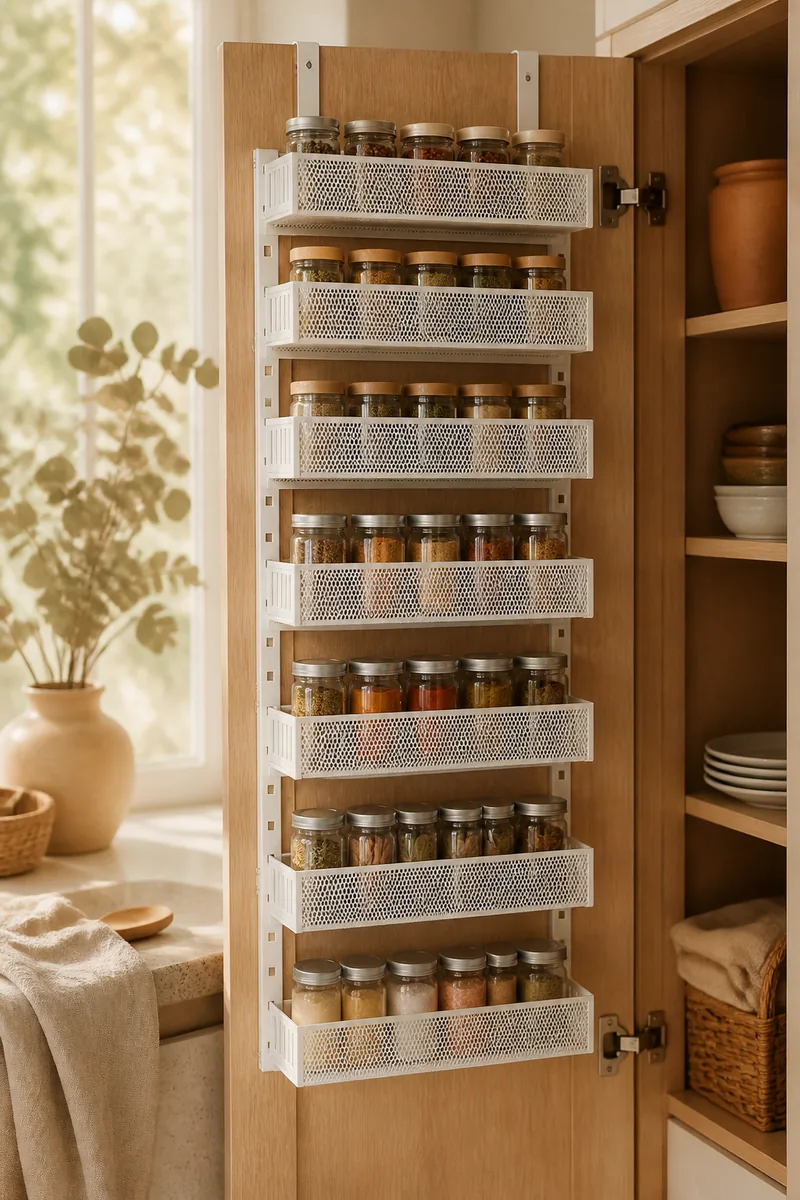 (opens Amazon in a new tab)
See our pick: over-the-door racks (opens Amazon in a new tab)
Keep it working
Keep the daily items at the front and the rarely used ones at the back. Review the cabinets every few months, and take out anything you have not touched.