
In this guide
A small kitchen does not need a bigger floor plan. It needs every cabinet, drawer and bit of wall to work harder. These twelve ideas are the ones that make the most difference in a tight kitchen, and most of them take a few minutes to set up and need no tools.
Before you buy: prices and stock change often, so we do not list prices. Use the links to check current options and read recent reviews. This guide contains affiliate links, so we may earn a commission if you buy through them, at no extra cost to you.
Start with the dead space
Look at the places you are not using: the inside of cabinet doors, the empty air above a shelf, the wall beside the stove and the corner nobody can reach. Almost every small kitchen has room for another shelf's worth of storage in those spots. Measure the cabinet height and depth before you buy anything, because that decides what fits.
Inside the cabinets
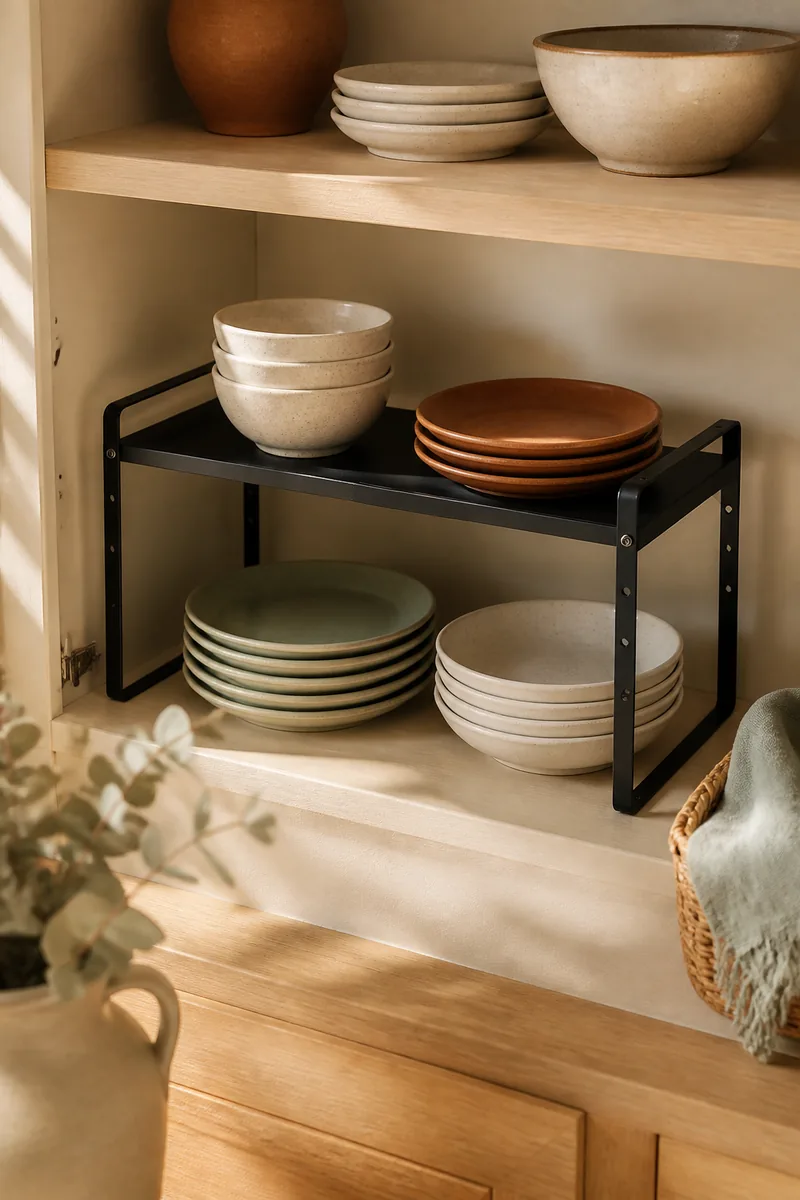
A shelf riser for plates and bowls
A riser doubles the usable shelf by adding a second level. Plates sit below and bowls or mugs on top, so you stop stacking and digging. Expandable ones adjust to different cabinet widths, which makes them easy to fit. Check the height before buying, since a riser that is too tall will not clear the shelf above.
 (opens Amazon in a new tab)
See our pick: cabinet shelf risers (opens Amazon in a new tab)
A turntable for corners
Deep corners swallow bottles and jars. A turntable brings everything back within reach with one spin. It works best in a deep cabinet, and it is a poor idea in a shallow one.
 (opens Amazon in a new tab)
See our pick: turntable organizers (opens Amazon in a new tab)
A basket that hangs under a shelf
A wire basket that hooks onto a shelf uses the dead space beneath it. It suits foil, wraps, bags and small packets. It needs a shelf with enough clearance below, so measure the gap first.
 (opens Amazon in a new tab)
See our pick: under-shelf baskets (opens Amazon in a new tab)
A rack for pot lids
Lids are awkward and slippery in a pile. A rack keeps them upright and easy to grab. Look for one that adjusts, since lid sizes vary a lot between pots.
 (opens Amazon in a new tab)
See our pick: pot lid racks (opens Amazon in a new tab)
A rack for baking sheets
Sheet pans and cutting boards stored flat in a stack are hard to get at. Turn them on their side in a rack and each one slides out on its own. It suits a cabinet that is tall rather than wide.
 (opens Amazon in a new tab)
See our pick: bakeware racks (opens Amazon in a new tab)
In the drawers and on the door
Adjustable drawer dividers
A drawer without dividers turns into a heap. Dividers give each tool a place, and the adjustable kind fits most drawers. A drawer that is very shallow limits what you can fit, so measure the depth.
 (opens Amazon in a new tab)
See our pick: adjustable drawer dividers (opens Amazon in a new tab)
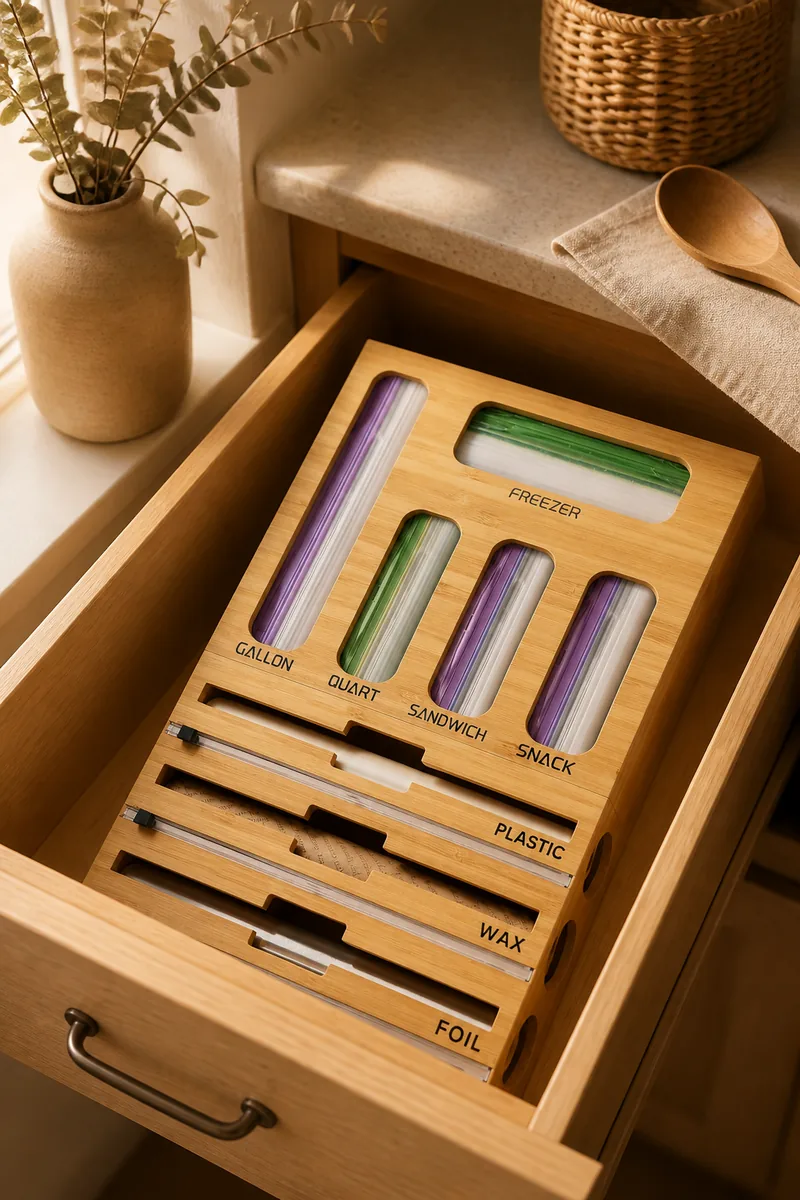
A rack for foil and wraps
Boxes of foil, parchment and bags slide around and end up at the back. A rack gives each box its own slot. It needs a deep drawer, so check the height before you order.
 (opens Amazon in a new tab)
See our pick: foil and wrap organizers (opens Amazon in a new tab)
A rack for the back of the door
Spices and small jars on the back of a door are visible and take no shelf space. A tiered metal rack hangs over the door or mounts on the wall, which frees a shelf for other things. The door has to close with the rack on it, so check the clearance first.
 (opens Amazon in a new tab)
See our pick: over-the-door racks (opens Amazon in a new tab)
On the wall and the counter
A wall rail with hooks
A rail with hooks and a few small baskets turns a bare wall into storage for utensils, mugs and towels. It costs very little, and the contents are within reach when you cook. If you rent, look for one that mounts with strong adhesive instead of screws.
 (opens Amazon in a new tab)
See our pick: kitchen wall rails (opens Amazon in a new tab)
A magnetic knife strip
Moving knives from a block to the wall clears counter space and keeps blades sharp. Wood looks warm in a small kitchen. Mount it where children cannot reach.
 (opens Amazon in a new tab)
See our pick: magnetic knife strips (opens Amazon in a new tab)
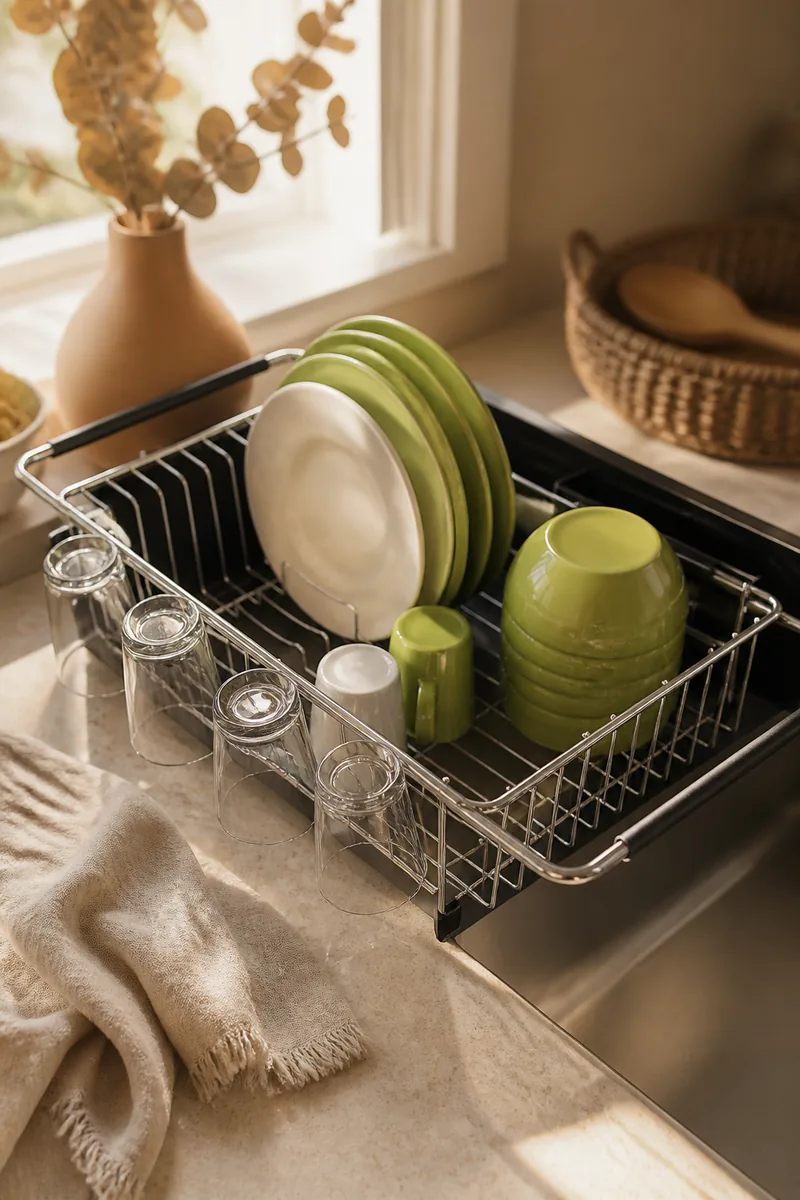
A dish rack over the sink
A rack over the sink uses air space and leaves the counter free. It drains straight into the sink. Check that it fits across your sink, and note it needs a sturdy sink edge.
 (opens Amazon in a new tab)
See our pick: over-the-sink dish racks (opens Amazon in a new tab)
A label maker
Once everything has a home, labels keep it there. A small label maker also helps the rest of the household find things without asking.
 (opens Amazon in a new tab)
See our pick: label makers (opens Amazon in a new tab)
Keep it working
Do one area at a time and live with it for a week before moving on. If something does not get used, it probably does not belong in the prime spots. Small kitchens stay tidy when the things you use daily are easy to reach and everything else is stored higher or lower.